
Annual Conference: A fresh look at work and wellbeing
HR Network News article on the IES annual conference in 2016 on work and wellbeing.
The conference began with Dr John Ballard, Director of The At Work Partnership, who set out to reveal the reality of workplace health, beyond the rhetoric of initiatives like pedometer and ‘biggest loser’ challenges. Dr Ballard outlined how these programmes often lack the long-term impact to offer sustained, cross-organisation behavioural change. This myth-busting session also highlighted how important it is for employers to take note of quality evidence when approaching workplace health initiatives. Amongst other approaches, this talk noted the effectiveness of legislation as an effective enforcer of behavioural change within the workforce.
A recurring element of the day’s talks was how organisations can sustain the positive impacts of workplace health initiatives. Both Dr Ballard and Helen Wray, Health and Wellbeing Business Partner at Mars Chocolate UK, highlighted the need to move employees ‘from knowing to doing’. Helen offered the first of the day’s two case studies; the second was given by Dr Vedat Mizrahi, Director of Medical and Occupational Health Europe for the UK and Ireland at Unilever. These two case studies offered delegates the chance to learn ‘what works’ in occupational health strategies and, through the panel discussions, helped identify the main challenges that organisations face in improving the wellbeing of their workers.
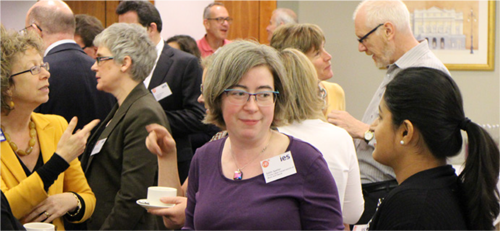
Professor Karen Middleton CSP, Chief Executive at the Chartered Society of Physiotherapy, offered an interesting talk on the benefits of self-referral to physiotherapy. She noted that this early-intervention approach importantly has work as an outcome whilst reducing costs and enabling employees to have access to the right person at the right time.
Another engaging presentation came from Jane Abraham, recently appointed Policy Fellow at the Department for Work and Pensions (DWP) Work and Health Unit. Jane’s talk was highly anticipated, with the publication of the DWP’s green paper, Improving lives, the day before. Having established that there are no quick wins when it comes to workplace health programmes, Jane outlined the difficulties facing SMEs in identifying, or justifying, the return on investment of these programmes.
Our final talk of the day came from Chair of the BMA Occupational Medicine Committee, Dr Paul Nicholson OBE, who discussed the dangers of cognitive enhancers, or ‘smart drugs’. One might suggest that cognitive enhancers are a potential boost to the UK’s said ‘knowledge economy’, yet this talk revealed, perhaps unsurprisingly, that smart drugs are a real threat to occupational wellbeing.