

Labour Market Statistics, September 2026
Unemployment remains at 4.9% with continued falls in jobs and vacancies
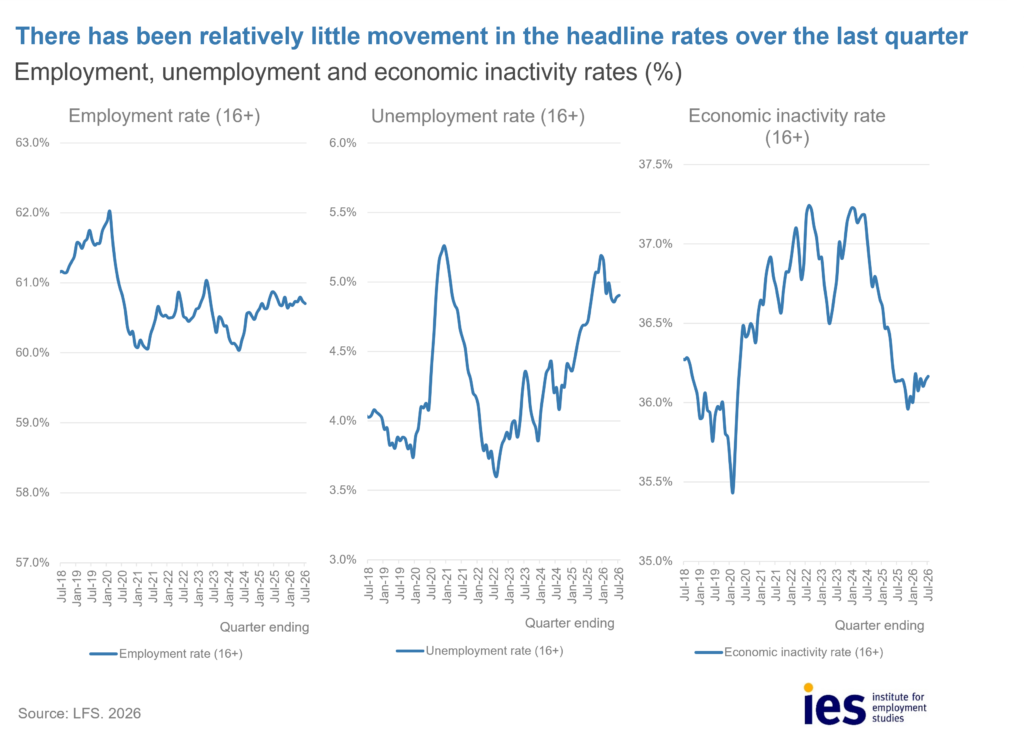
The UK labour market has remained flat with little movement in the headline employment, unemployment and inactivity rates over the last quarter. Unemployment remains at 4.9%, unchanged from the previous quarter and close to a five-year high.
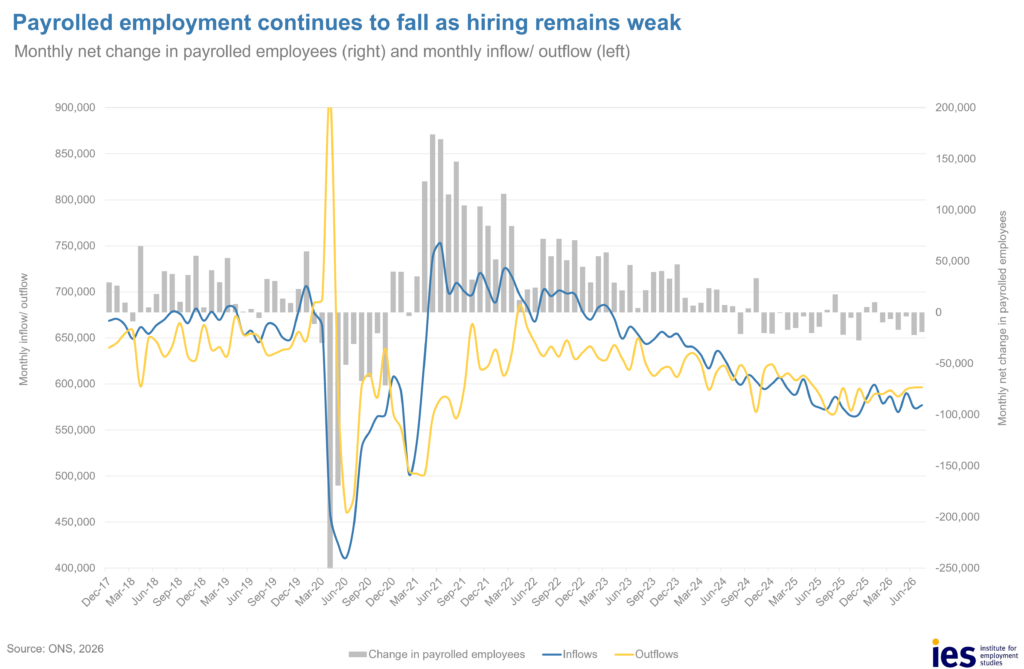
Payrolled employment has been flat or falling for nearly two years. Revised estimates indicate the number of payrolled employees decreased by 19,000 between June and July, while early estimates suggest a continued decrease of 26,000. Overall, payrolled employment has fallen by over 200,000 over the last two years, as employers have been reluctant to hire. Vacancies have also fallen and are at their lowest level since early 2021.
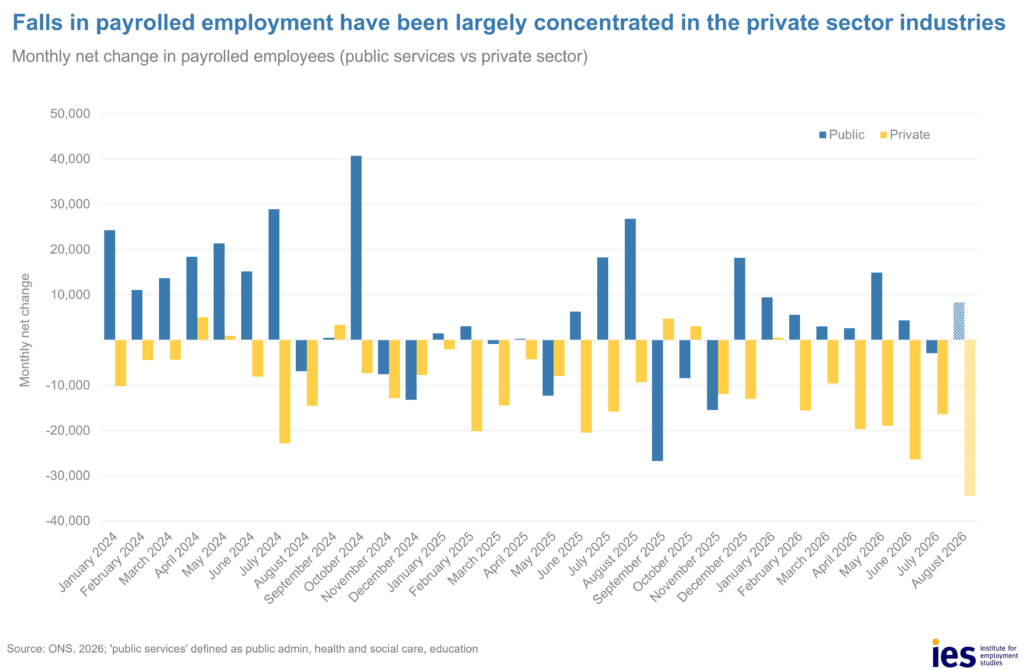
Trends in payrolled employment, vacancies and pay highlight weak private sector growth. Recent declines in jobs have been driven overwhelmingly by private sector industries, while employment in public services has remained more resilient. Retail and hospitality have experienced the largest falls in payrolled employment over the last 12 months, with both facing sustained pressure from weaker consumer demand, rising operating costs and subdued business confidence. Wage growth in the private sector is also stagnating in real terms, meaning that overall real pay growth remains low.
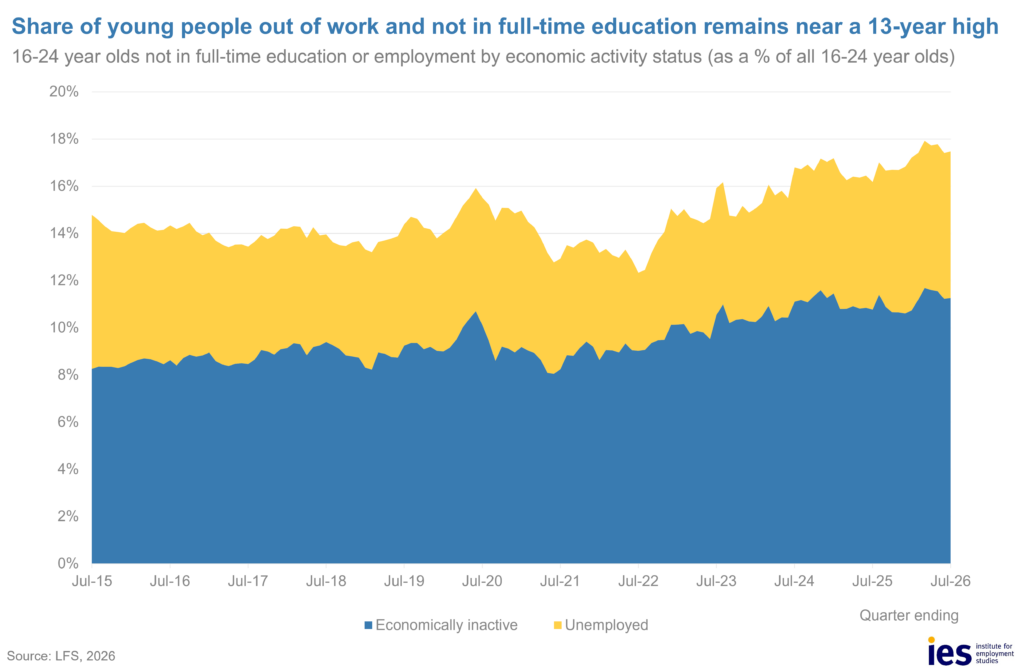
Young people are bearing the brunt of a weak labour market. Around 1.3 million 16- to 24-year-olds are now not in work or full-time education, highlighting the urgent need for effective support to prevent long-term scarring effects. The share of 16- to 24-year-olds who are not in employment or full-time education remains close to a 13-year high, following increases in unemployment and economic inactivity.
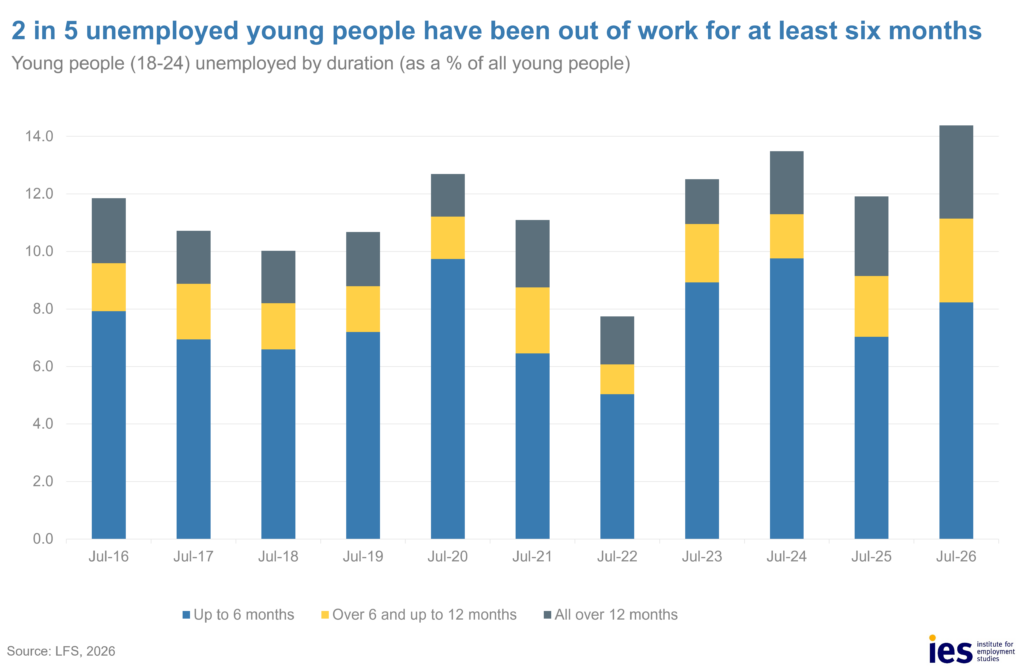
As hiring remains weak, many unemployed young people are struggling to find work, increasing the risk that they remain out of work for longer periods. More than 2 in 5 unemployed young people have been out of work for at least six months.
With the Alan Milburn review due to report on solutions, our research reviewing the international evidence on work-first approaches emphasises the importance of investing in trusted relationships, tailored support and effective pathways into work for young people to improve long-term employment outcomes. To make a lasting difference, this must be matched by sustained investment in support and reforms to the wider system, bringing the UK closer to international best practice and improving young people’s prospects of moving into and staying in good-quality jobs.
Any views expressed are those of the author and not necessarily those of the Institute as a whole.