Network News Issue 4
Peter Reilly, Principal Associate Fellow
 IES has just completed its third action learning set on human capital metrics, following previous sets focusing on performance management and workforce planning.
This action learning set came out of a discussion between IES and HMRC, where there was a mutual interest in learning how organisations are measuring their people performance and how they are presenting their results. In the period between the kick-off meeting in July to the final session in March, HMRC provided the premises and IES organised the speakers and facilitated five sessions.
The following content themes were covered:
- The link between people and organisational performance
- Measuring employee engagement
- Representing productivity and innovation improvement
- Measuring talent and evaluating talent management
The set also considered ways of presenting data through dashboards and scorecards; online collection, processing and report production; and developing the necessary analytical skills to understand what the data are telling us.
Here we outline the key learning points or subjects covered by each content theme.
The link between people and performance
Penny Tamkin outlined four lenses through which the people/performance link is seen:
- The human capital view, which suggests that the skills employees bring have a direct impact on organisation performance.
- The skills utilisation view suggests that there is not always a direct impact, as the impact relies on the organisation utilising the skills of their workers appropriately, e.g. through job design.
- The employee engagement view, which focuses more on how the employee feels about work, with the more engaged employees performing better.
- The high-performance working view argues that better performance is achieved through increasing employee autonomy and control of their own workload.
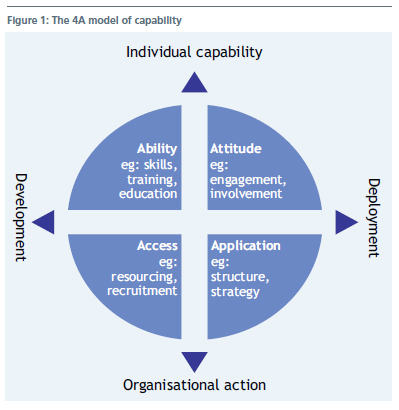
Figure 1 below shows the way Penny herself has conceptualised the people/performance link (Tamkin et al (2004), Skills Pay: The Contribution of Skills to Business Success, Sector Skills Development Agency).
Measuring employee engagement
Some of the learning points from this session with Dilys Robinson included:
- Different types of stakeholders define employee engagement in very different ways:
- the organisational desire to have staff identify with the firm and work to make it better;
- the consultancy emphasis on what the organisation can do to improve performance;
- the academic focus on employee feelings about work.
- Some surveys measure job satisfaction not employee engagement. The former may be a component of the latter but misses out important issues around pride in the organisation and the wish to contribute to organisational success.
- These differences in methodology make cross-organisational comparisons difficult except where the same survey provider is used.
- The use of focus groups after a survey was commended as an effective means of understanding the reasoning behind employee responses. It was important to get representative groups to participate to validate the answers.
- Pulse surveys have proved helpful in getting shorter, sharper feedback on more specific HR policies and practices.
Measuring productivity and innovation
Roger Cooper (IES Associate) gave some pointers on how organisations measure productivity and innovation:
On productivity
Productivity is a much used and often mis-used term to describe how much an organisation does, often in comparison to another organisation. In going back to first principles we were able to:
- Be clearer about what productivity is (and isn’t)
- Identify the limitations of productivity as a single measure and how this can inform the design of complementary measures
- Look at some of the unintended consequences that poorly designed measurement systems can create
- Identify ways in which the pitfalls can be overcome
Regarding Innovation
- Only about a third of Fortune 1000 companies have formal innovation metrics
- Of those that do, typical measures include:
- Annual R&D budget as a percentage of annual sales
- Number of patents filed in the past year
- Total R&D headcount or budget as a percentage of sales
- Number of active development projects
- Number of ideas submitted by employees
- Percentage of sales from products introduced in the past X year(s)
Source: http://www.innovation-point.com/innovationmetrics.htm
Defining and measuring talent management
Wendy Hirsh’s key points about measuring talent management were:
Defining talent management
- ‘Talent’ in rhetoric and US businessspeak sometimes equates to the whole workforce such that talent management then equates to the whole of HR management and development.
- Talent management is sometimes linked to workforce planning: ‘the right people in the right place at the right time’
- ‘Talent’ in practice usually means those already in post and/or in pipelines for senior/‘critical’ roles. Talent management is then concerned with managing these populations and their future pipelines.
And measuring it
- General workforce metrics: looking at current workforce and the flows in, out and through the organisation.
- Qualitative assessment of ‘talent’ eg skills, performance, and potential.
- Metrics around succession cover and talent pipelines.
- Measuring the impact/effectiveness/ outcomes of talent management interventions.
One organisation, for example, couches its talent pipeline metrics in the following terms:
- STRENGTH of pipeline measured by percentage of roles in scope to succession planning which have ‘Ready Now’ successors identified.
- DEPTH of talent pipeline measured by percentage of roles with ‘Ready Soon’ and ‘Ready Later’ successors and with ‘Emerging Talent’ identified as successors for key roles QUALITY of pipeline measured by percentage of vacancies which are filled by an identified successor.
- DIVERSITY of pipeline measured by pattern in successors/ emerging talent by differences of experience, background, flexibility, gender, ethnicity.
For more information or advice on human capital metrics or any of our other learning sets, please contact Peter Reilly at [email protected].