
Featured

National Inclusion Week: can we build trust without agreeing?
Can organisations build trust and collaboration among people who do not share the same beliefs and values?
We publish blogs to provide insights from, and stimulate debate about, the latest research and thinking. Any views expressed are those of the author and not necessarily those of the Institute as a whole.
Featured
Can organisations build trust and collaboration among people who do not share the same beliefs and values?
Featured
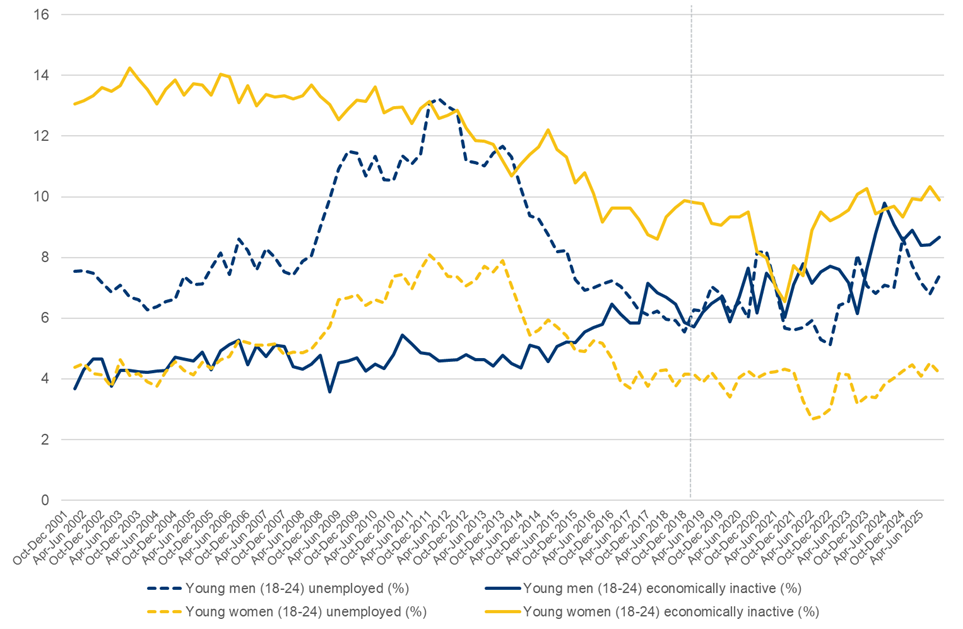
The UK labour market has remained flat with little movement in the headline employment, unemployment and inactivity rates over the last quarter.
In a blog originally published by Adzuna, Nick Litsardopoulos examines the rapid rise in Ai technology, its impact on jobs and job market, and how it fits into the historical context of ever-changing work and employment patterns.
Duncan Brown explores in depth the urgent need for reform in employment status to address the 'grey area' between employee and self-employed, and to ensure that workers are entitled to the appropriate rights and benefits.
This research looks at how employment advisors at Restart, who work with the long-term unemployed to help them return to work, can best be supported in terms recruitment, retention and professional development.
The IES Trials Unit has the goal of providing evidence for policy and practice in the education and employment arenas. As the Unit goes into year three, Dr Susie Bamford and Dr Alexandra Nancarrow reflect on what has been achieved to date, current projects and future plans.
In the light of the new Labour government's pledge to make flexible working the default, Astrid Allen looks at how this could be possible for the NHS, and what the benefits could be.
Claudia Plowden Roberts examines the approaches and strategies of the Paris 2024 Paralymics, how these have improved awareness and perceptions of disability, and potential lessons and benefits for employers and employees.
Kyla Ellis examines current attitudes and political policy in relation to carers and how with the change in government there is an opportunity for improvements, including the role of employers in this process.
Astrid Allen summarises the findings from a two-year action research programme to introduce flexibility into frontline roles and evaluate its impact, on both the individual and the organisation.
Kate Alexander explores what party manifestos tell us about the current direction of travel around employment rights by identifying which policy levers are ‘in’ and which are ‘out’ in 2024.
With just over a week to go before the General Election, Nita Clarke OBE, the Director of the Involvement and Participation Association and Mike Clancy, General Secretary of Prospect trade union, consider the current state of industrial relations in the UK and look ahead to the much-needed reforms of the labour market that any new government will need to address.