
Event write-up: HR Directors’ Retreat 2014: Innovation
At Barnett Hill on 19 and 20 June, participants of the HR Directors’ Retreat were treated to a range of perspectives on innovation. Dilys Robinson has written a full and interesting account of each presentation, which is available to read exclusively here.
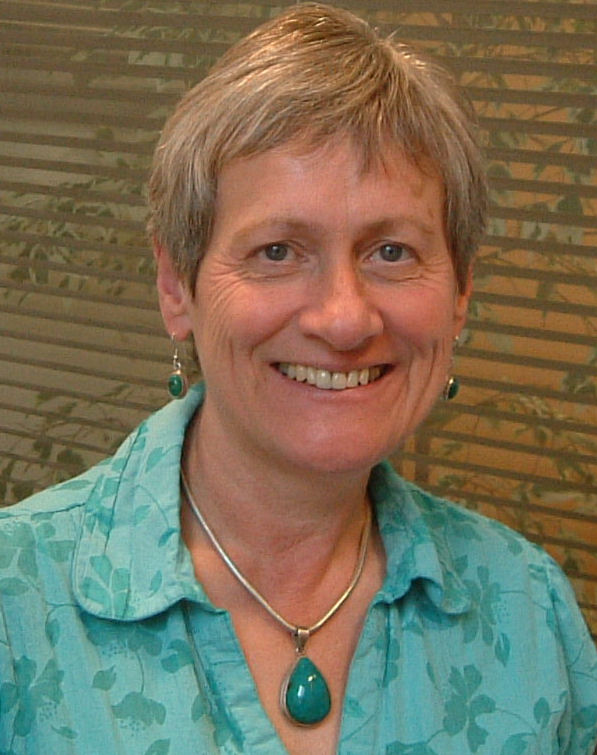
Dilys Robinson, Principal Research Fellow
 At Barnett Hill on 19 and 20 June, participants of the HR Directors’ Retreat were treated to a range of perspectives on innovation. Dilys Robinson has written a full and interesting account of each presentation, which is available to exclusively to members.
Below, we offer a short summary:
Penny Tamkin set the scene, saying that the UK is not seen as having a good track record of investment in innovation; many organisations are risk-averse.
Max Mckeown followed with a lively, challenging and graphic presentation. Innovation is about making new ideas useful; ideas need to be nurtured and polished, or they look ugly to everyone else. The way forward is to democratise innovation by encouraging it at every level. One response to a big shock wave is to adapt and become more innovative, although a typical organisational response is to minimise the threat, attack the messenger and deny the problem.
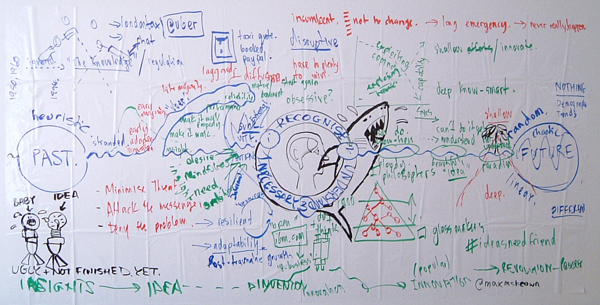
The graphic output from Max McKeown’s presentation
Richard Burton explained that, at EDF, innovation is something new that meets a need, is replicable, creates value, and improves performance. Although the industry is highly regulated, with safety as its top priority, the biggest constraint to innovation is culture, attitudes and beliefs. Within HR, which is well placed to encourage innovation because of its influence at career touch-points, there is a focus on working with the organisation via special projects to improve performance via innovation.
Duncan Brown’s topic was pay and innovation. There are two very different approaches: give people as little as possible, but with the possibility of a huge reward; or take money off the table, give people a comfortable environment and let them get on with innovating. Research suggests that both approaches can work. When asked, ‘Does money motivate people?’ there is no consensus. Many organisations are now opting for ‘total reward’, which needs clarity and a deep understanding of the workforce.
Steve Trenchard led a practical session on mindfulness, and told us about engaging with employees innovatively at Derbyshire Healthcare. The psychology of mindfulness is linked to the psychology of compassion; people are more creative if they are treated kindly, and mindfulness helps us to be creative because it encourages us to stop and think positively. We enjoyed practising ‘the mindful minute’!
Wendy Cartwright told us about being HRD at the Olympic Delivery Authority. Innovation was linked to sustainability, and how things were done was as important as what. Safety was paramount and required a really open culture; not surfacing problems was a ‘cardinal sin’. A ‘Learning Legacy’ recorded learning about many things, so that innovation could be replicated in future.
Linda Holbeche said we must be prepared for multiple plausible futures, plus surprises. Innovation is about turning bright ideas into things that work, which needs intense discipline and requires us to challenge organisational routines and forms. Greater democratisation of the workforce will be needed to allow innovation to flourish. Building shared value will be essential. The future could be ‘make or break’ for HR, which needs to tackle culture, challenge, talk to Boards and help create an inclusive organisational mission.
Find more information on our events programme
- Contact Emma Stewart-Rigby if you have any queries, comments or suggestions for our events.