
Featured
Labour Market Statistics, September 2026
The UK labour market has remained flat with little movement in the headline employment, unemployment and inactivity rates over the last quarter.
We publish blogs to provide insights from, and stimulate debate about, the latest research and thinking. Any views expressed are those of the author and not necessarily those of the Institute as a whole.
Featured
The UK labour market has remained flat with little movement in the headline employment, unemployment and inactivity rates over the last quarter.
Featured

Following the JobsPlus pilot partnership publication, Olivia Garner reflects on what we are learning from the programme, drawing out some of the key themes and lessons for those designing and delivering place-based employment support.
Ahead of the publication of the paper on JobsPlus partnerships next week, Harry Fox explores the positive impact of working collaboratively with local organisations, and how this has benefitted specific JobsPlus pilot schemes in different locations.
In her latest blog, Meenakshi Krishnan considers what role should AI play in people management, and how much should employers be willing to delegate to algorithms when making decisions about people?
Emily Kramers reflects on the evaluation of the Embedded Maths project that looked at how maths confidence and competence at home and work could be delivered by integrating Level 1 maths concepts into the curricula of Health & Social Care Level 2 qualifications.
The UK is facing a dual challenge of both consistently focusing on the development of the invisible skills and systematically measuring them. Unless both the issues are addressed together, the disadvantage gap is likely to widen in the context of the future labour market.
Representing IES at the annual Forum of the European HR Directors’ Circle last week, Dr Duncan Brown came away with some great ideas and examples for taking the opportunities presented by our ageing workforces across Europe, as well as how states and employers should be responding to the undoubted challenges.
Alison Carter examines how carers can most effectively be supported in the workplace by colleagues, managers and employers, particularly in terms of the critical first step of self-recognition as a carer.
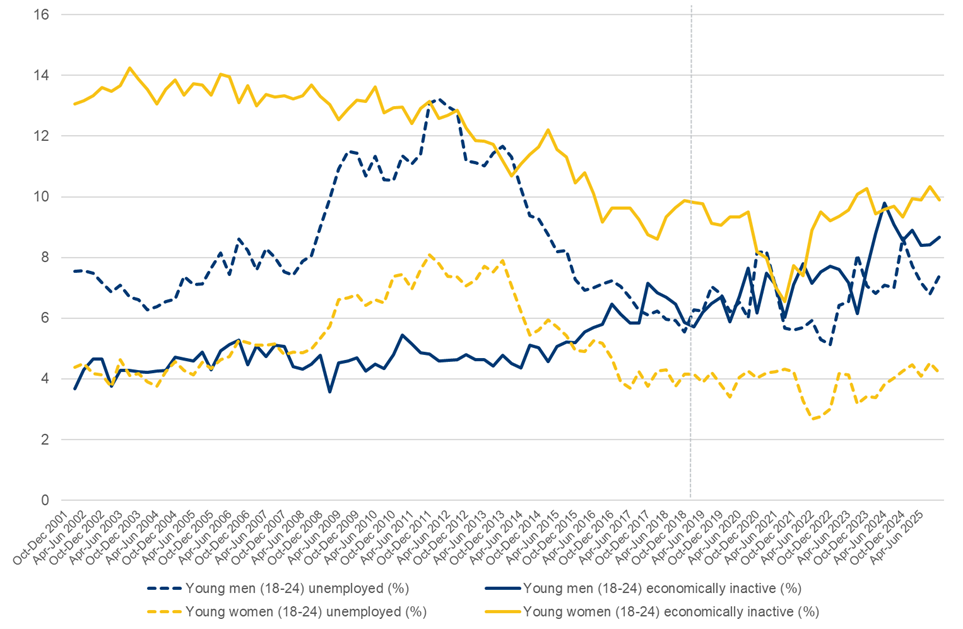
With NEET levels rising, how do we effectively support those furthest from the labour market to move into and sustain work?

Using the example of flexible working and recent research on its application (or lack of), Duncan Brown argues that HR functions are overly focused on policy drafting and procedural niceties, such that these policies’ goals are often not delivered into practice. IES research highlights why these policy-into-practice gaps exist, and how to close them.
With the State Pension age rising to 67, Emily Kramers considers what’s needed to drive the recruitment and retention of older workers, drawing on personal experience to demonstrate the process of a career change in later life and the positive impact of age diversity at work.
The publication of more details on pay transparency proposals in the UK and EU appears to have incurred diametrically opposed reactions from affected employers. Duncan Brown provides more detail and suggests employers need to continue to implement greater pay transparency and understanding.