Future of Work: Behind the masks – good work for autistic women
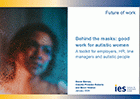
This toolkit explores what good work means for autistic women, and what employers can do to create genuinely inclusive workplaces. It draws on in‑depth interviews with autistic women and highlights that many are underdiagnosed, face workplace misunderstandings, and often mask their traits to avoid stigma often leading to stress and burnout.
The output is the result of a knowledge exchange between Stevie Barnes from University College London (UCL), and Claudia Plowden Roberts and Becci Newton from IES. It is based predominantly on Stevie’s in-depth qualitative research with autistic working women, which was guided by a lived experience advisory group formed of autistic women and IES team members. This publication ties in with the House of Lords Committee review of how well the Autism Act of 2009 is working, and the practical applicability of the evidence here will make the difference to autistic people at work.
Key insights
- Autistic women thrive when work aligns with their strengths, interests and preferred ways of working.
- Sensory environments (lighting, noise, temperature) strongly affect wellbeing and performance.
- Masking is common, especially due to gendered expectations, but is exhausting and harmful.
- Stereotypes, for example seeing autism as a 'disorder' or 'superpower' can lead to poor support and discrimination.
- Access to workplace adjustments is inconsistent and many women don’t know what to ask for or face bureaucratic barriers.
- Line managers can have a major impact, being supportive enables success and unsupportive line managers drive people out of roles.
Recommendations for employers
- Use strengths‑based approaches and avoid assumptions.
- Adapt sensory environments based on individual needs.
- Provide adjustments from day one and ensure policies are inclusive and practical.
- Train managers and colleagues on up‑to‑date autism and neurodiversity knowledge.
- Foster psychologically safe cultures where people can share preferences without fear.
The toolkit covers in detail what good work for autistic women looks like, how employers can provide personalised support, inclusive attitudes, and environments shaped by understanding rather than stereotypes, and how inclusion can be embedded in leadership, HR practice, and everyday line management.
You currently have 0 items in your shopping basket
Related publications
-
Working with participants - lessons from ReAct: focus on neurodiversity

-
Neurodiversity, jobsearch and work - a review of the evidence